When the blocker is paperwork, not code
Some platform APIs are only open to registered companies. What that means when you build alone, and how I decide whether to wait or work around it.
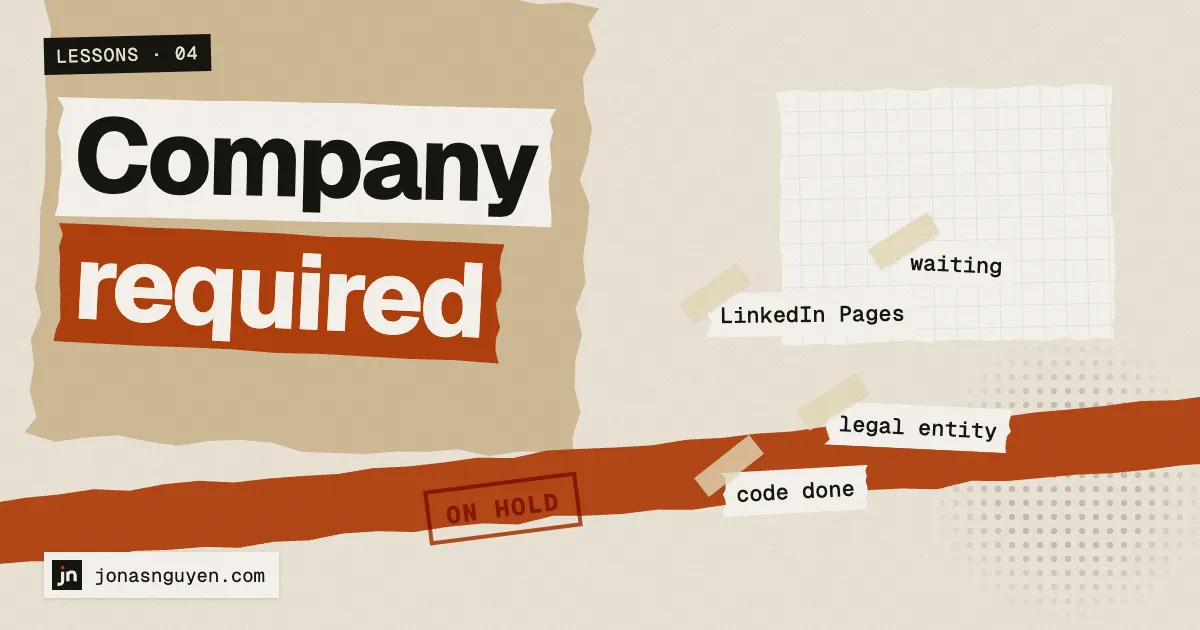
Most blockers in building software are yours to fix. A few are not code at all.
LinkedIn Pages
Clienzo posts to personal LinkedIn profiles today. Posting to a Company Page needs a different LinkedIn API — the Community Management API — and LinkedIn grants it only to a new, separate app, and only for registered legal organisations.
Clienzo is not a registered company yet. So the Company Page integration is written, tested and switched off, waiting behind a configuration setting. When the paperwork exists, turning it on is an application form and two settings, not a project.
Tumblr asked too
When I asked Tumblr to lift the shared rate limit from part 8, the use case was fine. The follow-up questions were about the operator: the legal entity, the person accepting the API agreement, a contact address on the product’s own domain, and terms of service that match what the app does today.
None of that is engineering. All of it decides whether a feature can grow.
How I decide
For each blocker like this, I write down three things:
- What exactly is required, from the platform’s own words — not from a forum post.
- What it costs to satisfy, in money and time.
- What the feature is worth to customers right now.
If the feature is not worth the cost yet, the code stays, switched off, and the decision is dated so I do not research it again every month. If it becomes worth it, the paperwork is the next task, not a surprise.
For anyone building alone
Check the eligibility rules of every API you depend on before you build on it. “Developers” in the docs sometimes means “companies”, and that changes your plan more than any rate limit.
related
The Meta App Review trap: every permission approved, login still broken
Clienzo passed Meta App Review, and Facebook Login still refused everyone except me. The fix was one permission that the API said was already live.
The networks I chose not to support (yet)
Reddit, Substack, WhatsApp Channels, Snapchat — and why. A look at what decides whether a platform is worth integrating when you build alone.
Three ideas I said no to, and the one I picked
Before building Autopilot I looked at a link-in-bio tool, an AI visibility tracker and SMS review requests. Why each one lost, and what made the winner different.